How can intelligent systems understand and safely adapt complex operational environments? Our research begins with that question, and with experiments that can prove us wrong.
Research is part of the system
Trustworthyautonomystartswithbetterquestions.
Evidence / hypotheses / uncertainty
Research in progress
How should a system reason when the evidence is incomplete?
Our research connects guarded recovery, competing hypotheses, active evidence acquisition, and verification.
Do explicit competing hypotheses and targeted evidence improve diagnosis compared with rules, a single model call, and an unguided tool agent? First results on GridCast say yes, with one model and small samples.
First results
Operational graphs
Investigating which dependency, lineage, change, and policy relationships materially improve the quality of operational reasoning.
Research direction
GridCast reference estate
A synthetic electricity-forecasting estate on Kubernetes with fifteen reproducible failures, injected through the channels they would use in real life. It is a testbed for evaluation, not a live utility deployment.
Reference estate · first results
Constrained and edge diagnosis
Studying how much grounded diagnosis can run locally under limits on memory, compute, energy, and connectivity.
Long-term research
Why it matters
Operatorshavealwaysreasonedunderuncertainty.
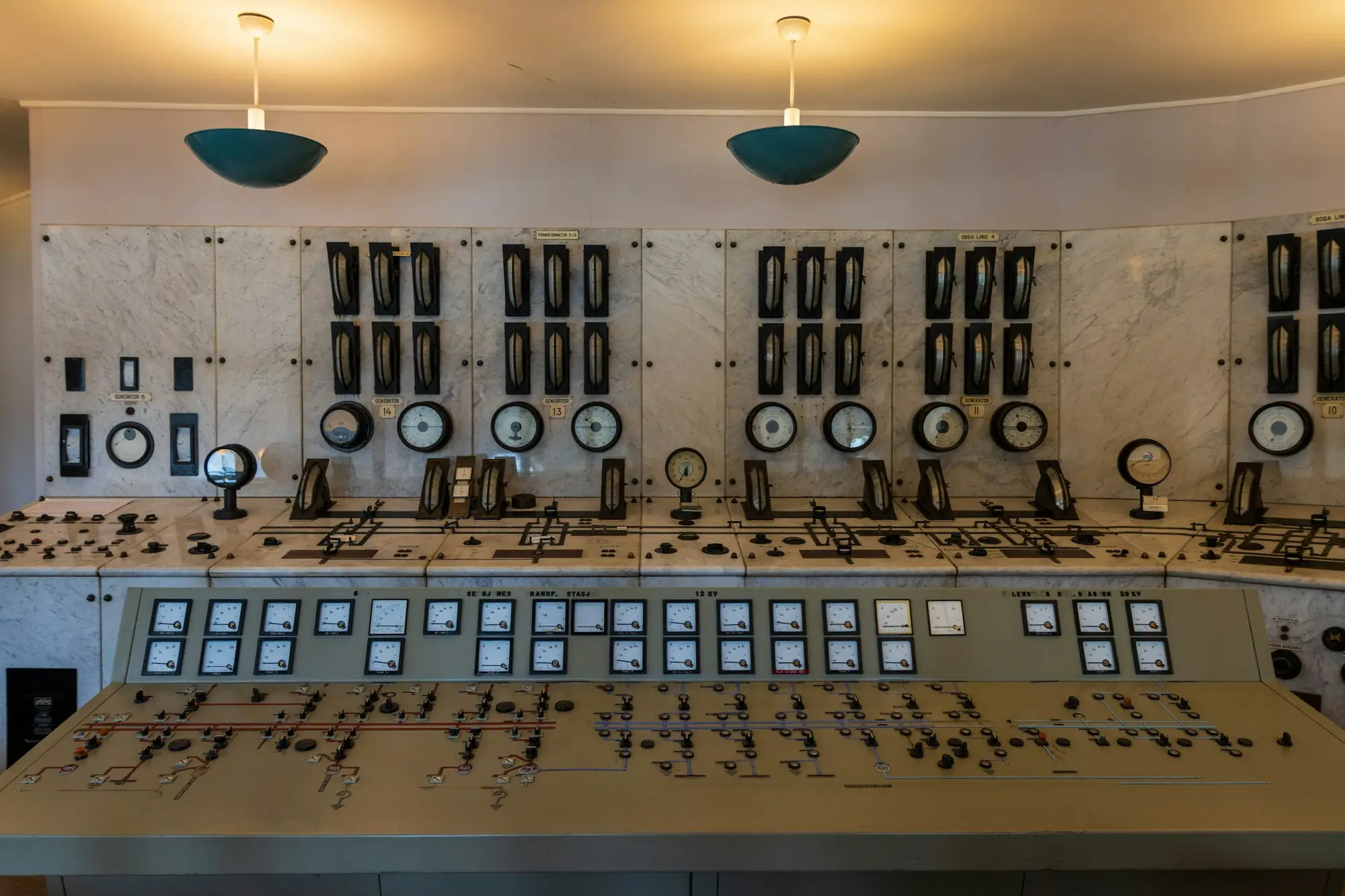
Control rooms made system state legible to people. Our research asks how software can do the same for systems too complex to read at a glance — and stay accountable while it does.
Every result is compared against what an engineer would actually try: deterministic rules, a model given only the alert, a single model call with curated evidence, and a tool-using model without Lumis’ structure.
The first comparison is published, with methods, transcripts and mistakes: one synthetic estate, one model, two runs per scenario. It is a starting point, not a benchmark.